Laura Burnett
Laura Burnett
Research Data Scientist · Systems Neuroscience PhD
I’m excited about creating tools and workflows to help faciliate scientific research and improve the reach of scientific knowledge.
Recent Projects
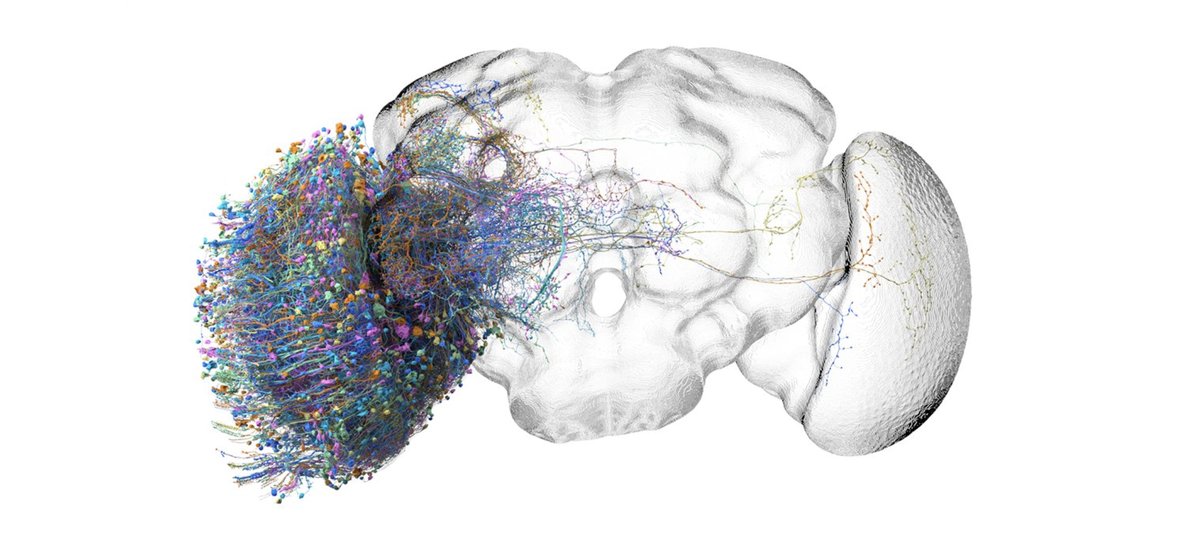
Making sense of a fruit fly's neural wiring diagram
Visual system connectivity analysis and 3D visualisation of >50,000 neurons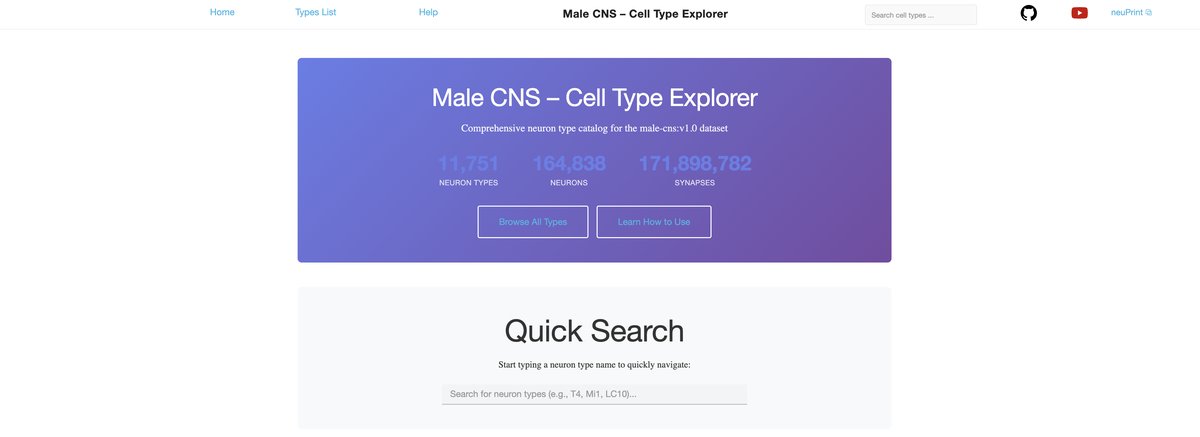
Connectome Cell Type Explorer
Python CLI to generate an interactive web resource from a connectome dataset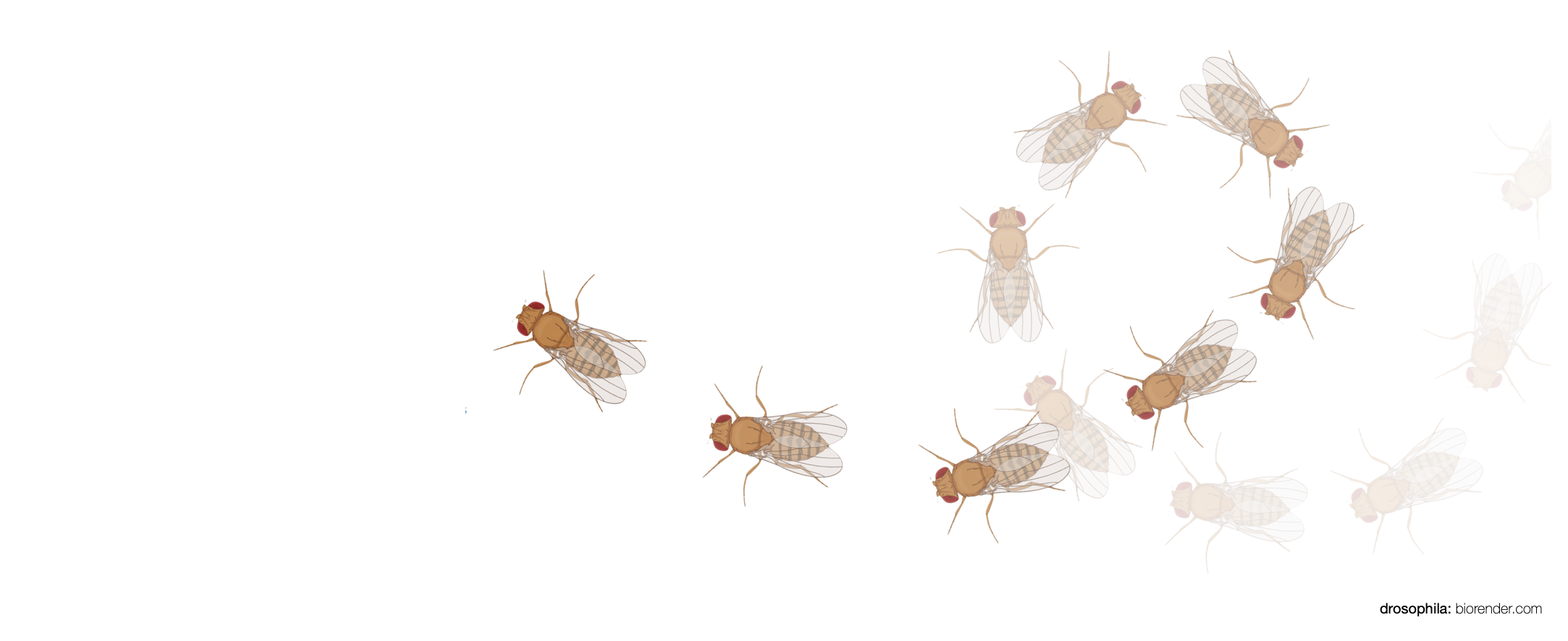
Characterisation of collective fruit fly behaviour to moving patterns
End-to-end pipeline for a high-throughput behavioural screenResearch experience
August 2023 - May 2026
Postdoctoral Research Scientist
Reiser Lab, Howard Hughes Medical Institute (HHMI) Janelia Research Campus
Details
Over the course of this position I worked on four main projects.
Analysing the fruit fly visual system connectome. The collaboration set out to package and analyse the complete visual system connectome of the male Drosophila melanogaster, sorting roughly 53,000 neurons into 732 cell types. The paper that accompanied the public release of that dataset, Nern et al. 2025, had two jobs: to offer a first pass of analysis, and to give other researchers a scaffold for their own. It is an executable paper, so anyone can rerun the code and reproduce the figures from the public repository. Within a core team of 12, I worked on the spatial patterning of cell types across the visual system: coverage, how many cells of a type sit in each column, and completeness, how many columns a type covers between them. Neither is measurable without the hexagonal grid system which the group developed, which maps individual cells onto specific columns within the visual regions. I built the scatter plots and hexagonal heatmaps that carry this analysis, and some of that plotting code was later used by an external package for connectome analysis. It was also where I learnt to work in Git alongside other people, to query the connectome database in Cypher, and to use pandas extensively for analysis.
Building neuview, a web-based data exploration tool. neuview gives every cell type in the fly nervous system a page of its own, with pre-computed statistics, interactive graphics, and tables of what feeds into it and what it feeds. It started as a supplement to the paper above, covering the visual system alone; another member of the team and I extended it to all 12,000 or so cell types in the entire nervous system, and built it so that it can generate the same pages for new connectome datasets as they are added to neuPrint in the future. My specific contributions included the embedded Neuroglancer view and the interactive features that allow regions of interest and connected neurons to be shown in this view, the scatter plots of cell size against population size, and the hexagonal heatmaps, which I extended from the original static plots with JavaScript so that occupancy can be viewed layer by layer through the medulla, lobula and lobula plate.
Experimental project: Investigating fruit fly walking behaviour in response to moving stimuli. I designed these experiments and built the entire experimental pipeline: the stimuli for the lab’s custom LED arenas, the protocol and acquisition scripts, the synchronisation across camera, stimulus and environmental logging, and the analysis and plotting that followed. I wrote the documentation, built dashboards for browsing the data, and mentored three students running their own experiments on the rig.
Research software for patch clamp electrophysiology. A collaboration with an external group and with a patch clamp specialist at Janelia, aimed at investigating the molecular mechanisms behind directional motion signalling. He recorded from T4/T5 cells while the flies viewed visual stimuli. I built the experimental workflow for these experiments, from the stimuli themselves to the scripts that ran the protocols and the analysis that followed. The protocol works in two passes: the first maps a cell’s receptive field, and the second generates stimuli on the fly that appear only within this target region of the fly’s field of view. Detailed explanations of the code and the rationale behind the workflow were included in the documentation, which became a useful reference for everyone involved.
The role was incredibly collaborative and it was fun to be able to work on the number and variety of projects. It made me a much stronger Python programmer and left me convinced that research software is worth building properly instead of being left as a collection of scripts. I presented this work externally at NeuroFly in 2024 and gave talks internally at Janelia.
September 2016 - May 2023
PhD Student
Joesch Lab, Institute of Science and Technology Austria (ISTA)
Details
My thesis asked whether genetically distinct mouse models of autism share the same perceptual impairments, and where in the brain those impairments arise. Working with the looming escape response, an innate defensive behaviour triggered by an expanding shadow overhead, we found that three unrelated models (Setd5, Cul3 and Ptchd1) were all slower to react to a visual threat and less able to avoid the place where they had met it. In Setd5 mice we traced this to the dorsal periaqueductal grey, where raised Kv1 conductance left neurons less able to fire; blocking those channels restored both the escape response and the place avoidance. The work was published in PLOS Biology.
ISTA runs a rotation-based graduate programme, so my first year was coursework and four rotations: bulk RNAseq analysis of mouse brain tissue in the Hippenmeyer group, the molecular basis of neurodevelopmental conditions in the Novarino group, an out-of-field rotation in the Sixt group building microfluidic devices to study how adhesion molecules guide leukocyte migration through complex 3D environments, and the Joesch group, where I helped assemble a custom two-photon microscope, learnt about the circuits behind visual attention and wrote my first lines of MATLAB. My courses included advanced statistics and the neuroscience track course.
I then joined the Joesch group as one of its founding members, which meant a real say in how the lab space came together and a hand in building many of the rigs I went on to use. Over the following years I learnt to perform stereotaxic surgery to deliver viral tools to specific brain regions, to record extracellularly in vivo and analyse what came back, to implant optic fibres for optogenetic experiments, and to confirm probe placement and viral spread through histology and confocal imaging. The behavioural work leaned heavily on MATLAB: I wrote all of my own analysis code and helped others in the group with theirs, and trained DeepLabCut models to track pupil position and full-body pose in behaving mice.
June 2016 - August 2016
Graduate Summer Intern
Hippenmeyer Lab, Institute of Science and Technology Austria (ISTA)
September 2015 - June 2016
Master’s Student
with Dr Conor McCann within the Burns Lab, UCL Institute of Child Health, London
February 2015 - June 2015
Undergraduate research placement
Young Lab, The University of Melbourne, Australia
September 2014 - November 2014
Undergraduate lab experience
with Dr Joanne Britto in the Tan Lab, The Florey Institute, Melbourne, Australia
Education
September 2015 - May 2016
Natural Sciences MSc (First Class Honours)
Neuroscience
University College London (UCL)
September 2012 - May 2015
Natural Sciences BSc (First Class Honours)
Organic chemistry & Biomedical sciences
University College London (UCL)
July 2014 - July 2015
Study Abroad (First Class Honours & Dean’s List Award for outstanding grades)
The University of Melbourne, Australia
2010-2012
A-Levels (Mathematics: A*, Biology: A*, Chemistry: A, Spanish: A*)
AS-Levels (Mathematics, Further Mathematics, Biology, Chemistry & Spanish)
King’s High School, Warwick
Publications
Sexual dimorphism in the complete connectome of the Drosophila male central nervous system
Berg, S., … Burnett, L.E., et al. Cell. 2026.
Connectome-driven neural inventory of a complete visual system
Nern, A., Loesche, F., Takemura, Sy., Burnett, L., et al. Nature. 2025.
Burnett, L.E., Koppensteiner, P., Symonova, O., Masson, T., Vega-Zuniga, T., Contreras, X., Rülicke, T., Shigemoto, R., Novarino, G., Joesch, M. PLoS Biology. 2024.
Burnett, L.E. PhD thesis, Institute of Science and Technology Austria (ISTA). 2023.
Hao, M.M., … Burnett, L.E. et. al. Developmental Biology. 2019.
McCann C.J., … Burnett, L.E. et. al. Nature Communications. 2017.
Beattie, R., Postiglione, M.P., Burnett, L.E. et. al. Neuron. 2017.
Talks and presentations
2024
NeuroFly (poster)
University of Birmingham, UK
2022
FENS Forum of Neuroscience (poster)
Paris, France
FENS International Winter School (poster)
Sölden, Austria
2021
Austrian Neuroscience Meeting (poster)
Salzburg, Austria
Joint symposium with the Champalimaud Centre for the Unknown (talk)
Online
Joint symposium with Universität für Bodenkultur Wien (BOKU) (talk)
Institute of Science and Technology, Austria
2020
FENS Forum of Neuroscience (poster)
online
2019
Austrian Neuroscience Meeting (poster)
Innsbruck, Austria
2019
Color Vision: Circuits and Behaviour conference (poster)
HHMI Janelia Research Campus, Ashburn, Virginia, USA
2016 - 2026
Internal seminars and lab meetings (talks)
ISTA and HHMI Janelia Research Campus
Teaching and mentoring
2023 - now Janelia’s Women and Non-binary Mentoring Group, HHMI Janelia Research Campus
Active participant (now remote alumni member) of a mentoring group at Janelia. We met once a month to discuss topics relevent to our current and future careers in science.
2023 - 2026 Supervision and mentoring, Reiser Lab, HHMI Janelia Research Campus
One research technician (1 year), one graduate student (4 months), one summer undergraduate and two summer high school students.
2018 - 2020 Teaching Assistant, Neuroscience Track Core Course, ISTA
Taught the image analysis with MATLAB section to incoming first-year students.
2016 - 2023 Supervision and mentoring, Joesch Lab, ISTA
Six graduate rotation students (3-month placements), one undergraduate summer student.
2021, 2022 Teaching - one-day summer camp session ISTA
Designed and led a one-day session entitled “Seeing is believing? Vision and optical illusions” at the ISTA Fakebusters summer camp for ~25 high school students.
Outreach and community
2026 - now Volunteer maths tutor with Action Tutoring
I tutor year 6 students from disadvantaged socio-economic backgrounds maths for one hour a week.
2024 - 2026 Hour of code
Participated in Janelia’s “Hour of Code” sessions where we taught elementary school children to code in python.
2024 - 2026 RESET
Participated in Janelia’s RESET (Raising Excitement for Science, Engineering, and Technology) programme, a Janelia ScienceXplorers program, that aimed to inspire 5th-grade students through hands-on experiments and inquiry-based STEM activities.
2024 - 2026 EX2 Adventures Volunteer
Volunteered with the organisation EX2 to run trail running and mountain bike races in Virginia and Maryland, USA.
2021 Founding member, “Wissen Schafft’s” YouTube channel
Science outreach initiative together with ISTA colleagues. We created a YouTube series to tackle misinformation during the COVID-19 pandemic.
2018 - 2023 Founder and organiser, ISTA Art Club
Created and ran an extra-curricular club for members of ISTA to create art together in a social setting.
2018 - 2020 Graduate Student Association (GSA) Representative, ISTA
Recent Blog Posts
Introducing the Cell Type Explorer
Why this connectome web resource exists and how to use it.Building a personal documentation website with Quarto.
How to turn your notes into a free, shareable website - and why you should.Unsolicited advice for giving better presentations
10 tips from 10+ years giving research presentations.About
Hi! 👋 I’m Laura - I’m a research data scientist who’s worked in neuroscience labs for over a decade in the UK, US, Austria and Australia.
I love working with data, sifting through complex datasets to uncover novel insights and building software that makes data usable and informative to a broader audience. I care about FAIR principles (findable, accessible, interoperable, reusable) in everything I write, because reusable work is what gives research a life beyond the paper it was written for.
When I’m not at my computer you can find me with my nose in a book (both fiction and non-fiction), running along trails, trying to grow enough basil to make “fresh” pesto year round or making linoleum relief prints.
Feel free to reach out if you have any questions or just want to get in touch!